What Q2 2026 railroad earnings say about the trucking cycle
Four of the five North American railroads reported, and tighter truck capacity is showing up in rail volume, with pricing and operating leverage to follow
4 of the 5 North American rails reported last week. The current industry story:
The tightening truck market is showing up in stronger railroad volume, with price to follow as contracts roll. This comes after years of flattish industry revenue.
Markets are pricing some of this, with trucking and railroad stocks all up 20%+ YTD.
1. Truck-to-rail conversion
I've written about tighter trucking markets in North America in a prior post. Rail, as an alternative to trucking, is also benefitting.
Shippers are moving more freight from trucks to trains, especially in domestic intermodal (where a container moves most of the trip by rail and uses a truck for the first and last mile).
Union Pacific's EVP of Marketing and Sales said private, rail, and parcel container volumes were "all up double digits, benefiting from constrained truck capacity and share gains."
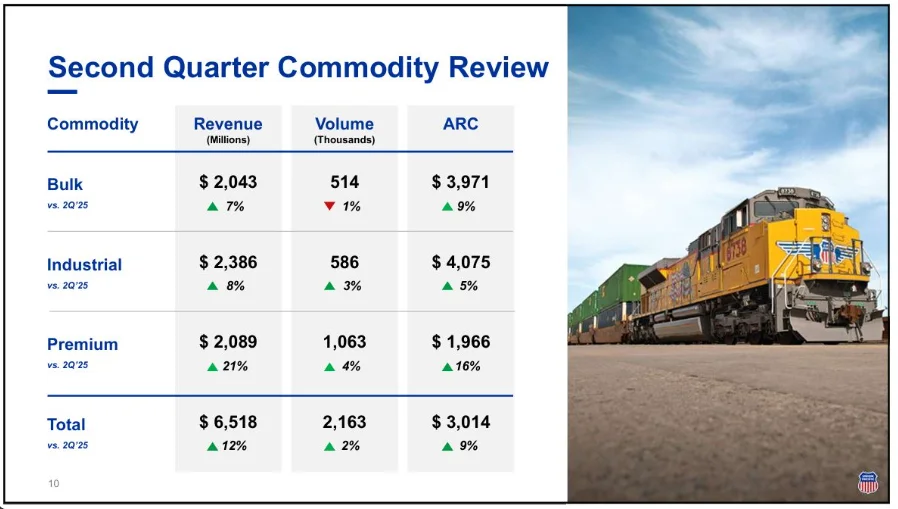
("Premium" is the Union Pacific segment that includes this activity.)
CSX intermodal volume grew 9%. CSX's CCO said "truck-to-rail conversions have accelerated."
2. Volume growth is leading pricing
Most large shippers negotiate annual transportation contracts. That means tighter truck capacity can move spot rates today while railroad contract prices reset up to a year later. Spot truck rates lead contract rail rates by a quarter or two as a result.
Norfolk Southern's CCO called the 1% increase in revenue per unit excluding fuel "the beginning of a positive shift in intermodal pricing ... I typically say you need 3 to 6 months of upward pressure to start moving that line up."
CSX said the truck market tightened near the end of its 2026 domestic intermodal bid season, and the next bid season is the larger pricing opportunity.
3. Higher volumes plus price equals operating leverage
More volume means more boxes on trains that were already running.
CSX for instance grew volume +6%, operating income +17%, with a 240bps operating margin expansion, and EPS +23%.
4. Protecting service
The knock against rails relative to trucking has always been service levels.
As volume returns, service becomes a bigger challenge, and the rails may need to reinvest to handle it. CSX's CEO: "Now we chewed up a big piece of the buffer, and we're sitting in a place where I think there's still more growth and we're not going to limit it."
Valuation
The rails are now priced for a cyclical upturn, especially as trucking is more impacted by higher fuel rates. The price for this oligopoly is ~high-teens xEBIT. Worth a look?
Claude / ChatGPT + CapRelay's MCP powers idea gen and industry read-across like this for 50+ investment firms. Try CapRelay for free.